

COP30 in Brazil: modest climate progress, but a clearer step forward for women
December 28, 2025
Global Solidarity with Iranian Women: Paris Workshop Highlights Courage and Resistance
March 30, 2026
Trailblazing German Politician and Champion of Equality
Germany is mourning the loss of Rita Süssmuth, one of the most influential and respected political figures in the history of the Federal Republic. The longtime CDU politician and former President of the German Bundestag has died at the age of 88, as confirmed by current Bundestag President Julia Klöckner. She described Süssmuth as “one of the most significant politicians of the Federal Republic of Germany,” whose impact will be felt for generations to come.
Rita Süssmuth served as President of the Bundestag from 1988 to 1998, becoming the first woman ever to preside over Germany’s parliament. Her tenure coincided with one of the most consequential periods in German history, including the years of reunification. At a time when top political offices were still overwhelmingly dominated by men, Süssmuth’s leadership marked a profound cultural shift and helped redefine the role of women in political power.
Born in 1937 in Wuppertal, Süssmuth initially pursued an academic career and became a professor of educational sciences at just 34 years old. When she entered federal politics in the 1980s, women remained significantly underrepresented in the Bundestag and ministerial positions. Her appointment in 1985 as Federal Minister for Youth, Family and Health, followed by her role as Germany’s first Federal Minister for Women, firmly placed gender equality on the national political agenda.
Süssmuth’s importance as a woman in politics extended far beyond symbolic milestones. She was a driving force behind reforms that directly improved the lives of women and families, including parental benefits, policies supporting the compatibility of family and professional life, and modern concepts of partnership between women and men. She addressed politically and socially sensitive issues such as marital rape, abortion law reform, and women’s bodily autonomy—often facing strong resistance from conservative factions, including within her own party.
Her independence and moral clarity frequently put her at odds with party leadership, yet they also earned her broad respect across political lines. Süssmuth demonstrated that women in leadership could exercise authority, challenge entrenched structures, and pursue principled policies without compromise. In doing so, she became a powerful role model for younger generations of women entering politics and public life.
Her commitment to women’s empowerment did not end with her parliamentary career. In 2015, Rita Süssmuth, together with several other prominent women, founded the Women’s Network for Change, an initiative dedicated to strengthening female leadership, promoting equal participation in decision-making, and fostering cross-generational and cross-sector dialogue. The network reflected her enduring belief that sustainable political and social progress requires women not only to be present, but to actively shape change.
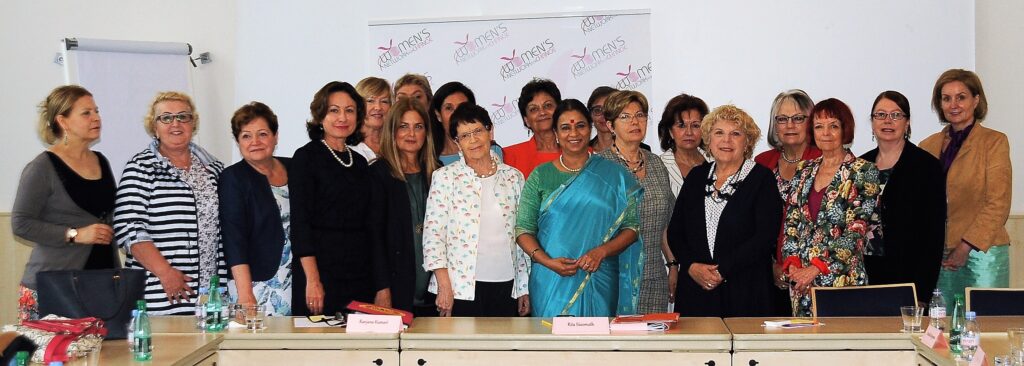
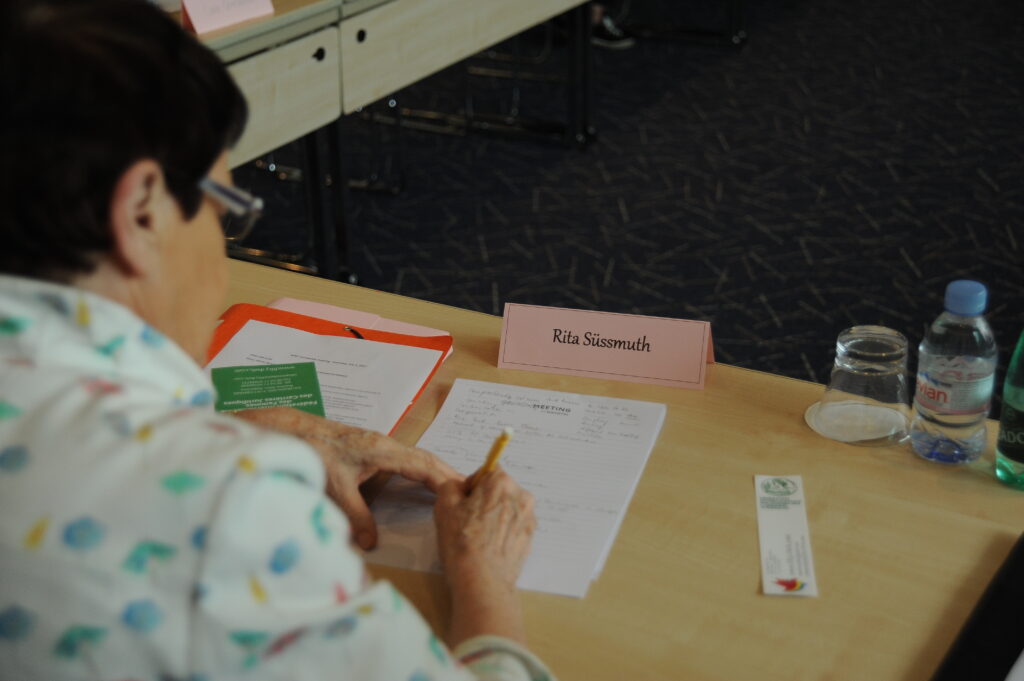
Beyond gender equality, Süssmuth remained deeply engaged in international reconciliation and democratic dialogue. As long-serving President of the German-Polish Institute, she played a central role in strengthening relations between Germany and Poland, advocating partnership, historical responsibility, and mutual respect. These efforts were recognized in February 2025 with the German-Polish Special Prize, awarded on the sidelines of the Munich Security Conference.
In June 2024, Süssmuth publicly revealed that she was suffering from advanced breast cancer. Even while undergoing intensive treatment, she continued her public engagement, stating that she wished to keep contributing to society “with all her strength.”
Rita Süssmuth lived in Neuss for more than five decades and was named an honorary citizen of the city in 2023. She leaves behind a legacy defined by courage, intellectual independence, and an unwavering commitment to equality, democracy, and reconciliation.
As a pioneer who broke barriers without ever allowing herself to be reduced to a symbol, Rita Süssmuth transformed German politics and expanded the space for women to lead—confidently, visibly, and on their own terms.