
Challenges and Resilience Among Aboriginal Girls
August 18, 2025
Women’s Network for Change Calls for Accountability Over Iran’s Escalating Human Rights Abuses at UN Human Rights Council
November 13, 2025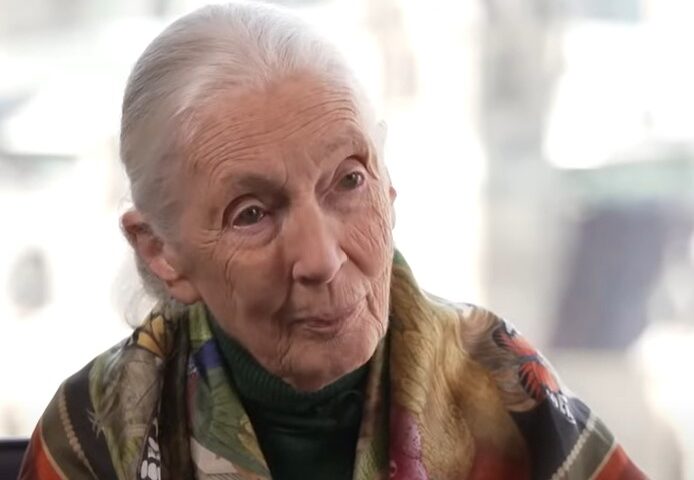
When Jane Goodall entered the forests of Gombe, Tanzania, in 1960 with nothing but a notebook, binoculars, and boundless curiosity, she was doing something almost unimaginable for a woman of her time. Science especially the field of primatology was dominated by men, and few believed that a young woman without formal scientific training could contribute anything meaningful. Yet Goodall not only transformed our understanding of humanity’s closest relatives but also redefined what it meant to be a woman in science.
Breaking Barriers in Science
Jane Goodall’s groundbreaking discovery that chimpanzees make and use tools shattered the rigid scientific boundary between humans and animals. Her work proved that empathy, intelligence, and complex social structures were not uniquely human traits. But her impact was never limited to scientific findings her very presence in the field challenged deep-seated gender norms. In the early 1960s, women were rarely, if ever, allowed to conduct field research alone. Goodall’s courage and success opened the door for countless women who had been told that scientific exploration was not for them.
The Power of Empathy and Observation
Goodall revolutionized research methods by emphasizing patience, compassion, and long-term observation over detached experimentation. Her approach naming the chimpanzees instead of numbering them, recognizing personalities and emotions was initially criticized as “unscientific.” Decades later, it became clear that her empathetic perspective had humanized science itself, proving that emotional intelligence could coexist with rigorous data. This redefinition of scientific practice inspired generations of female scientists who saw empathy not as a weakness, but as a strength.
Beyond Science: A Voice for the Planet
As her career evolved, Goodall became one of the world’s most respected environmental activists. Through the Jane Goodall Institute and the Roots & Shoots program, she empowered millions of young people especially girls to believe they could make a difference in protecting the planet. Her message was consistent and deeply human: “Every individual matters. Every individual has a role to play.”
For women across the world, Goodall embodied the power of persistence and purpose. She showed that leadership in science, conservation, and social change could take many forms gentle, patient, and profoundly transformative.
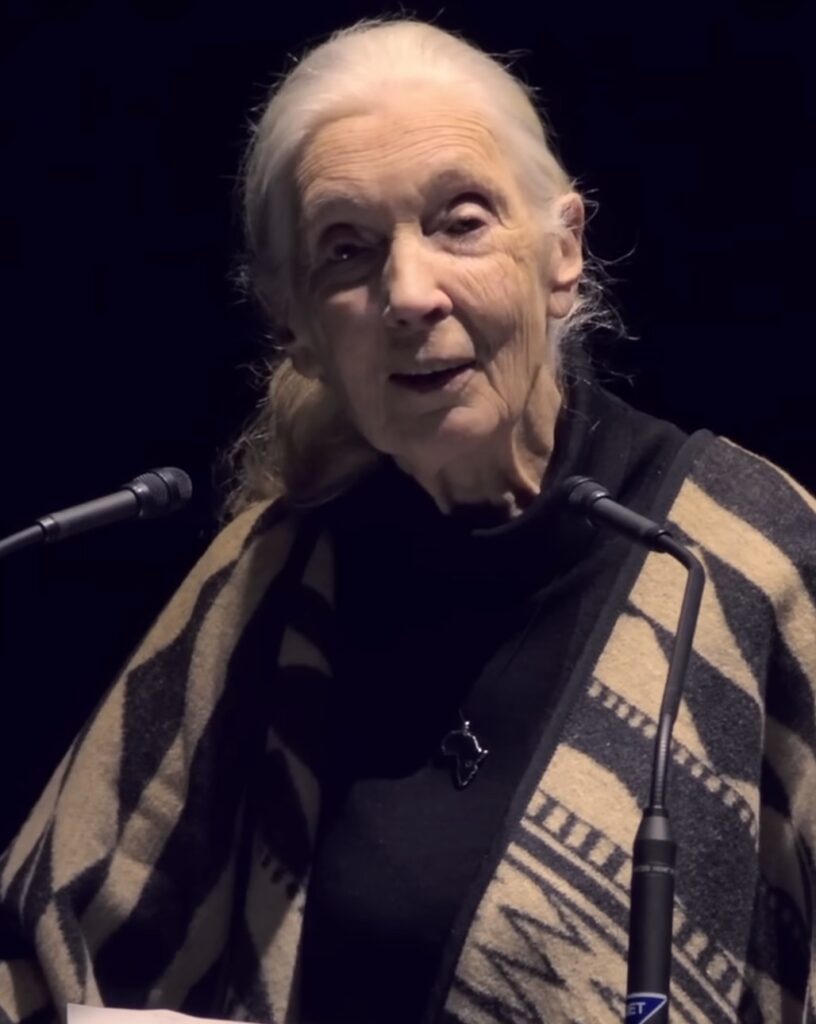
A Legacy That Continues
Today, Jane Goodall’s influence echoes through generations of women who pursue careers in biology, ecology, and environmental activism. She dismantled the myth that curiosity and compassion are incompatible with scientific excellence. More importantly, she modeled a way of living guided by empathy for other species, for nature, and for humanity itself.
Jane Goodall didn’t just study life she changed it. For women, she turned the act of observing the world into an act of defiance, and the act of caring into a form of power.