
UN Expert Takes ‘No Execution Tuesdays’ Campaign Global
October 15, 2026
In every era of history, there are women who not only overcome the limitations imposed upon them but also pave the way for future generations. Navi Pillay is one of those women; a woman who emerged from a society marked by racial discrimination and gender inequality to become one of the world’s most prominent figures in human rights and international justice.
Receiving the 2026 Nobel Peace Prize is a significant milestone in her career, but that distinction alone is not what makes her life inspiring. The true value of her story lies in the perseverance, courage, and determination that enabled her to overcome obstacles many regarded as impossible to surmount.
Growing Up in the Shadow of Discrimination
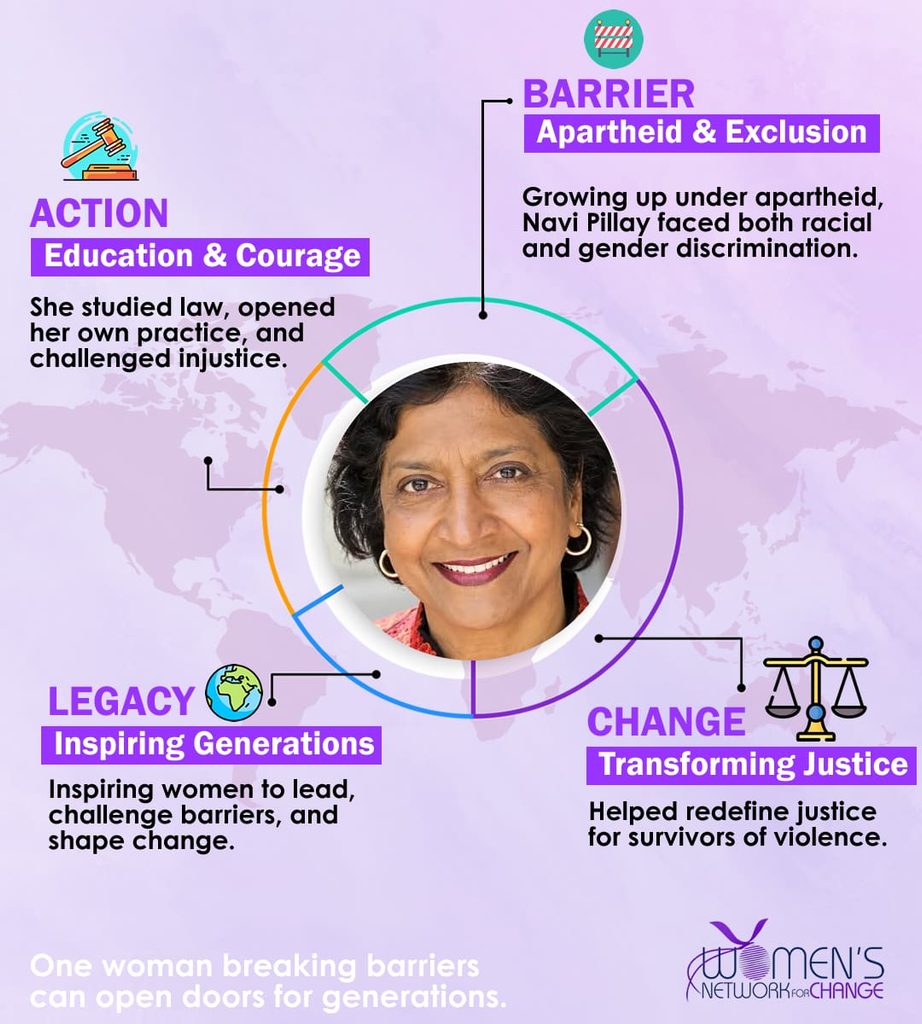
Navi Pillay was born on September 23, 1941, in Durban, South Africa, to a family of Tamil Indian descent. She spent her childhood and youth under the apartheid system, which restricted access to educational, professional, and social opportunities for millions of people. Her family belonged to the working class, and her father worked as a bus driver. Despite financial hardship, her family placed great importance on education and encouraged all of their children, both daughters and sons, to pursue their studies equally.
At a time when racial and gender discrimination limited the horizons of many girls, education became a tool for Navi Pillay to open new pathways for herself.
Creating Opportunity in the Face of Discrimination
After completing her legal education, she confronted a reality that many professional women in different societies have experienced: merit does not necessarily guarantee opportunity.
During the apartheid era, many law firms were unwilling to hire a non-white woman, and she faced serious barriers in securing employment.
But rather than give in, she forged her own path.
In 1967, Navi Pillay established her own law practice in Natal Province, becoming the first woman in the province to do so. This bold decision was more than a personal achievement; it broke one of the barriers that had limited women’s participation in the legal profession.
Her story is a reminder that leadership often begins at the moment a person refuses to accept the limitations imposed upon them.
Defending Justice During Apartheid
From the very beginning, Navi Pillay’s professional work was closely linked to the defense of human rights. As a lawyer, she represented anti-apartheid activists and worked on cases involving political prisoners and victims of discrimination. These efforts placed her among those striving for equality, freedom, and the rule of law in South Africa.
After the end of apartheid, her professional journey entered a new phase. In 1995, she became the first non-white woman appointed to the High Court of South Africa, a position that had previously seemed beyond the reach of women of color.
A Voice for Women in International Justice
One of the most significant chapters of Navi Pillay’s professional life was her service at the International Criminal Tribunal for Rwanda. In this judicial body, she played an important role in shaping legal precedents that strengthened the recognition of sexual violence and rape as instruments of genocide and crimes against humanity. This achievement is considered a landmark in international law and had a profound impact on how the international community addresses violence against women in armed conflicts.
This legal development was not merely a judicial accomplishment; it was also a significant step toward ensuring that the voices of women whose experiences had been ignored for years were finally heard.
Leadership on the Global Stage
Navi Pillay later served as a judge of the International Criminal Court and subsequently as the United Nations High Commissioner for Human Rights. In these roles, she emphasized the importance of accountability for human rights violations, human dignity, and the rule of law.
She was also one of the founders of Equality Now, an international organization dedicated to advancing women’s rights and combating gender discrimination. Her role in establishing such an organization demonstrates that her vision of justice extended beyond courtrooms and also focused on achieving equality in the everyday lives of women.
The True Legacy of Navi Pillay
What makes Navi Pillay’s story inspiring is not simply her international positions or the awards she has received. The true value of her story lies in the path she traveled.
She grew up in a society where both skin color and gender could determine a person’s future. Yet she refused to let the limitations of her time define her destiny. Through education, perseverance, and a belief in justice, she opened a path that had not existed for many women before her.
Today, Navi Pillay’s life serves as a reminder that meaningful change often begins with those who refuse to submit to existing barriers. She demonstrated that women can not only reach the highest levels of leadership, but can also play a decisive role in shaping the laws, institutions, and values that influence people’s lives.
In a world where many women still face discrimination and inequality, Navi Pillay’s story carries a clear message:
No barrier should determine the limits of a woman’s aspirations. She proved that courage, knowledge, and perseverance can transform even the most deeply rooted obstacles into opportunities for change.