

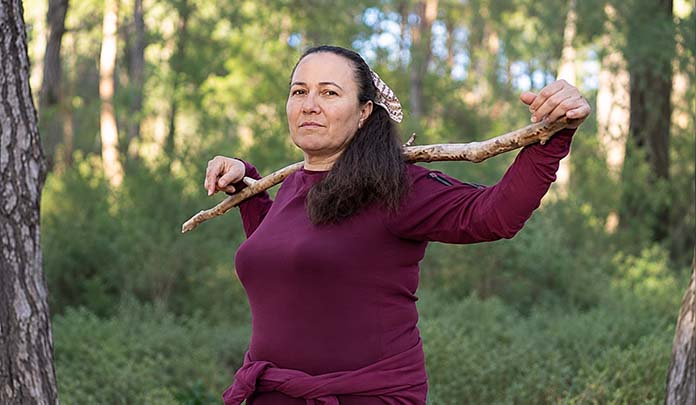
Women in Turkey’s Akbelen region are playing a leading role in a long-running struggle against coal mining expansion, fighting to protect their forests, olive groves, agricultural land and community livelihoods. Led by local representative Nejla Isik and her daughter Esra Isik, the resistance has become a prominent example of women’s environmental activism and community-led action. As Turkey prepares to host the COP31 climate summit, their struggle is also drawing renewed international attention.
Akbelen Women Leading the Fight to Protect Their Land
In the village of Ikizkoy, in Turkey’s southwestern Mugla province, residents have spent years opposing the expansion of coal mining around Akbelen Forest.
At the center of the resistance is Nejla Isik, an elected local representative who has become one of the most recognizable figures in the campaign to protect the region’s natural resources.
For Isik and other women in the community, the dispute is about more than preserving trees. The expansion of mining threatens olive groves, agricultural land and the livelihoods of families whose lives are closely connected to the surrounding environment.
Through protests, public campaigns and community organizing, women in Akbelen have helped bring local concerns into national and international discussions about environmental protection and the rights of rural communities.
A Mother and Daughter on the Front Lines
The involvement of Nejla Isik and her daughter, Esra Isik, highlights how resistance has extended across generations.
While Nejla has played a leading role in representing the community and organizing opposition to mining expansion, Esra has also actively participated in the protests.
On March 30, 2026, Esra was detained during demonstrations against the expropriation of 649 plots of land in the Ikizkoy area. She spent 42 days in pretrial detention.
On July 6, 2026, a criminal court in Milas sentenced her to two years and one month in prison on a charge of resisting public officials. The ruling is not final, and Esra remains free while her appeal is considered.
Her case has drawn attention to the legal risks faced by people who challenge mining projects and defend their communities’ land and environmental rights.
The Cost of Environmental Activism
The Akbelen resistance has faced repeated confrontations with authorities. Protests intensified in 2023, when large-scale tree cutting began in the forest to make way for the expansion of an open-pit coal mine.
Residents have responded through demonstrations, legal challenges and continued efforts to prevent further destruction of the surrounding environment.
A Human Rights Watch report published on October 13, 2026, documented concerns about the treatment of environmental activists in Turkey. Drawing on interviews with 23 people and an examination of legal cases, the organization reported arrests, the use of tear gas and other forms of pressure against environmental defenders.
The report also highlighted the broader challenges facing people who exercise their rights to peaceful protest and freedom of expression while opposing environmentally damaging projects.
For women such as Nejla and Esra Isik, activism has therefore involved not only defending their land but also navigating legal proceedings and pressure that can make sustained civic participation increasingly difficult.
Why Akbelen Women’s Leadership Matters
The women of Akbelen are not simply responding to environmental destruction. They are actively shaping the debate about who has the right to make decisions concerning land, livelihoods and the future of rural communities.
Nejla Isik’s role as an elected local representative is particularly significant. Her involvement demonstrates how women can move beyond participating in protests to assuming leadership positions and representing their communities in public debates.
The participation of her daughter Esra also illustrates the importance of intergenerational activism, as younger women continue the struggle despite the personal and legal consequences.
Their campaign connects environmental protection with broader questions of women’s participation in local decision-making, land rights, economic security and climate justice.
As Turkey prepares to host the COP31 climate summit in Antalya in November 2026, residents of Ikizkoy have invited world leaders to visit Akbelen and witness the consequences of coal mining expansion firsthand.
Their message extends beyond the protection of a single forest: women in rural communities are not merely among those affected by environmental decisions. They are also among the people organizing, leading and demanding change.