
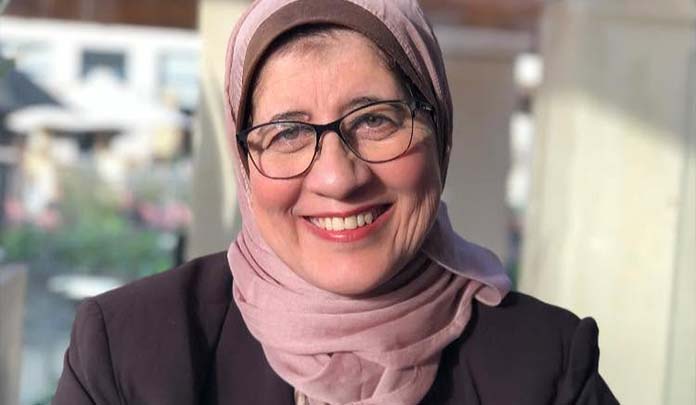
Egyptian scientist Amal Amin is working to expand opportunities for women in science. Specifically, she builds international networks that connect researchers across borders. Through her initiative, Women in Science Without Borders (WISWB), she established a vital global platform. Consequently, this network links scientists in more than 90 countries with policymakers, industry, civil society, and young researchers.
Amin serves as a professor of polymer technology at Egypt’s National Research Centre. She believes that many women and early-career researchers face steep barriers, particularly in developing countries. However, these obstacles do not stem from a lack of talent. Instead, researchers struggle with limited access to professional networks, mentorship, leadership opportunities, and international collaboration.
A Network Connecting Researchers Across Borders
Amin founded Women in Science Without Borders to create new collaborative pathways. Therefore, scientists can now work together beyond geographical, institutional, and disciplinary boundaries.
The initiative began in 2016 following a key conversation. During an international science diplomacy programme in Italy, Amin spoke with a Brazilian woman scientist. Their discussion revealed shared challenges facing women researchers. Ultimately, this dialogue inspired the creation of a global network.
Today, WISWB connects scientists across more than 90 countries with decision-makers and stakeholders. Although the initiative is gender-inclusive, it prioritizes women. In fact, improving opportunities and visibility for women researchers remains one of its central objectives.
Moreover, the network operates through international partnerships and the World Forum for Women in Science. Through these channels, it seeks to strengthen scientific cooperation and encourage mentorship. As a result, researchers from different regions gain a greater role in shaping scientific discussions.
Addressing Barriers to Women’s Participation in Science
Amin notes that women scientists continue to face persistent inequalities. For example, they encounter gender bias, unequal access to research funding, and limited infrastructure. Furthermore, many experience low professional recognition and struggle to balance academic careers with family responsibilities.
She argues that international scientific cooperation must evolve beyond traditional models. Historically, knowledge and resources flowed predominantly from developed countries to developing regions. Instead, researchers should participate in partnerships as equal contributors. Thus, institutions must recognize their expertise and ideas regardless of where they work.
Alongside her work with Women in Science Without Borders, Amin co-founded the Global Young Academy and the Egyptian Young Academy of Sciences. Additionally, her research focuses on advanced polymer materials and nanocomposites. These innovations have vital applications in medicine, water treatment, and energy.
In an interview published by Frontiers on November 10, 2026, Amin made an urgent appeal. Marking World Science Day for Peace and Development, she called for greater representation of women and researchers from the Global South. Specifically, she demanded their inclusion in scientific leadership, funding decisions, and international policy discussions.
Finally, her work highlights the power of building connections across borders. Such networks help women researchers gain access to vital opportunities. Consequently, they strengthen their professional influence and contribute more actively to the future of science.