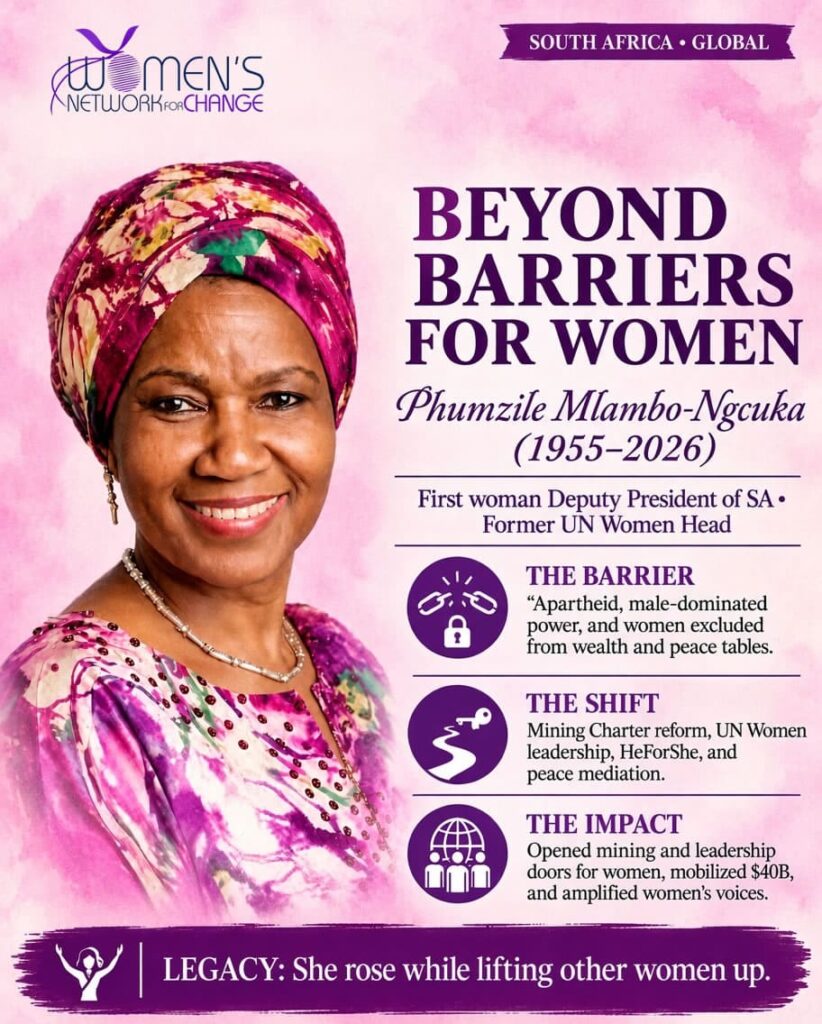

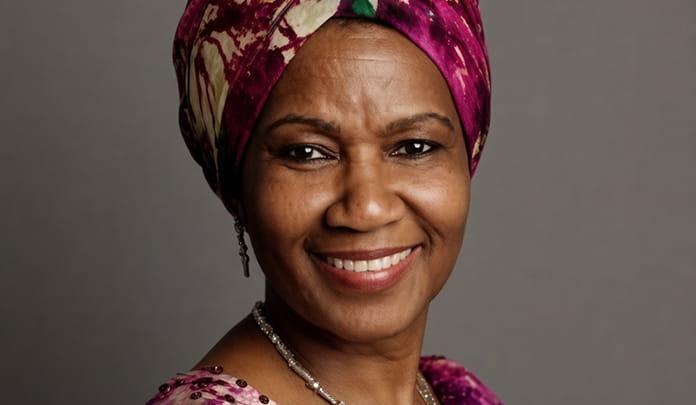
Phumzile Mlambo-Ngcuka passed away on November 20, 2026, at age 71, leaving behind a legacy defined less by the titles she held than by the closed doors she forced open. From anti-apartheid grassroots organizing in South Africa to leading UN Women on the world stage, Phumzile Mlambo-Ngcuka spent decades confronting deeply rooted racial, economic, and gender barriers—and building practical pathways for women to claim power. Honored at a state funeral in the Eastern Cape during the annual 16 Days of Activism against gender-based violence, her life invites a closer look not merely at a passing, but at how a leader navigates complex contradictions and reshapes what societies consider possible.
Navigating Personal Sacrifice and Grassroots Resistance
Her public journey began in the classroom and quickly collided with the double weight of gender and racial oppression under apartheid. After graduating in Lesotho and teaching in KwaZulu-Natal, she helped found the Natal Organisation of Women in 1983, serving as its first president and uniting urban and rural women around everyday survival and dignity—housing, healthcare, education, and freedom from discrimination.
That work unfolded alongside severe personal strain. Days before her planned December 1981 wedding, security police detained her fiancé, anti-apartheid lawyer Bulelani Ngcuka, who served a three-year prison sentence after refusing to testify against a comrade. Barred from visiting him and forced to work around intercepted letters, she stood firm in community organizing until his release and their marriage in 1985. By carrying those grassroots lessons to Geneva as a coordinator for the World YWCA, she bridged local struggle and global advocacy, designing programs that equipped young women across Africa, Asia, and the Middle East for leadership.
Breaking Racial and Male Monopolies in Post-Apartheid South Africa
When democracy arrived in South Africa, Phumzile Mlambo-Ngcuka approached state power not as an end in itself, but as a tool to dismantle structural exclusion. As a Member of Parliament in the country’s first democratic government, she helped draft the landmark 1996 Constitution, anchoring human dignity and equality before the law. Later, as South Africa’s first woman Deputy President from 2005 to 2008, she steered anti-poverty and skills programs designed to ensure economic growth reached women and young people.
Nowhere was her willingness to challenge entrenched norms clearer than during her tenure as Minister of Minerals and Energy (1999–2005). Confronting an industry long treated as the exclusive domain of men and a privileged white minority, she helped pioneer the Mining Charter—a transformative policy framework that opened ownership, employment, and community investment in mining to Black South Africans and tens of thousands of women. At the same time, she pushed rural electrification to ease the daily burden on households, insisting that political liberation rings hollow if women remain locked out of economic ownership. Even amid heavy cabinet duties, she continued her own academic path, completing advanced degrees and later founding the Umlambo Foundation to strengthen school leadership and digital skills for teachers in under-resourced communities.
Redefining Global Gender Equality and Peacebuilding
In 2013, Phumzile Mlambo-Ngcuka became the first African to serve as Executive Director of UN Women, inheriting a young agency in need of global momentum. Over eight years, she transformed it into a driving force in international policy. Under her stewardship, governments committed to gender equality as a standalone goal in the 2030 Agenda for Sustainable Development, while dozens of countries repealed discriminatory laws. Recognizing that lofty pledges fail without resources, she convened the Generation Equality Forum in 2021 with France and Mexico, mobilizing $40 billion in financial commitments from governments, the private sector, and civil society.
She also confronted a persistent strategic contradiction within gender advocacy: how to dismantle male-dominated systems without treating equality as a zero-sum battle. Through the global HeForShe campaign launched in 2014, she challenged men and boys to step forward as active allies against discriminatory norms. Simultaneously, she pushed women into spaces of high-stakes diplomacy where they had long been sidelined—supporting the Syrian Women’s Advisory Board in UN peace talks and later serving on the African Union mediation panel that secured the 2022 Pretoria Agreement to halt large-scale hostilities in northern Ethiopia.
A Legacy of Lifting Others While Rising
In tributes following her death, South African President Cyril Ramaphosa described her as “a great tree” that had fallen—a leader whose influence rested not on forceful speeches or displays of authority, but on quiet conviction, humility, and resolve. Her family echoed a truth visible across every chapter of her life: as she rose, she consistently lifted other women and girls with her. By facing contradictions head-on rather than sidestepping them, Phumzile Mlambo-Ngcuka proved that transformative leadership is measured by how many doors remain open after you walk through them.