
Giving a Face to the Numbers: European Parliament Exhibition Honors Victims of Iran’s January Uprising
May 15, 2026
Breaking the Boardroom Barrier: Europe’s Push for Women in Corporate Leadership
August 1, 2026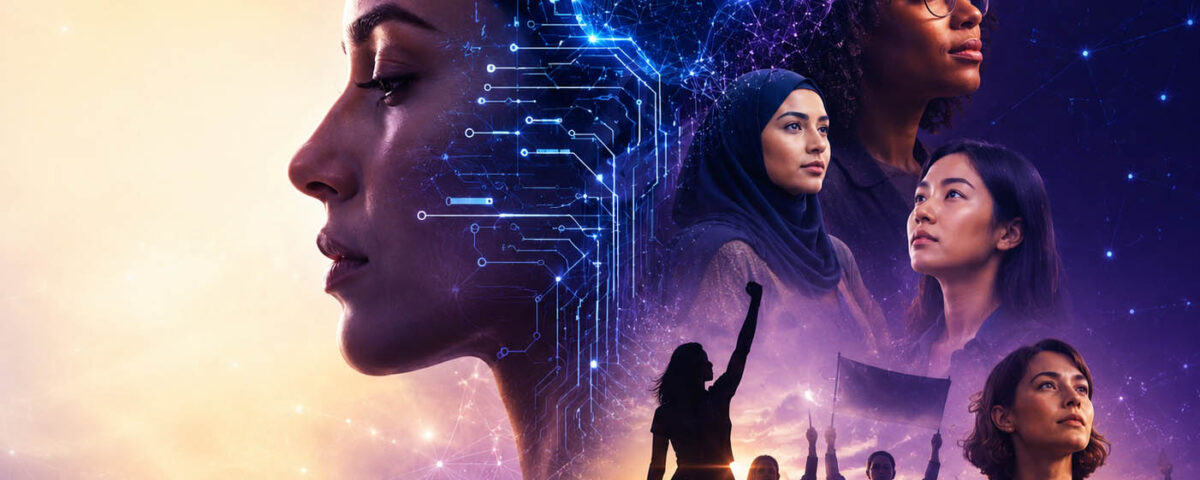
Artificial intelligence (AI) is transforming the way societies communicate, govern, and participate in democratic processes. While AI offers enormous opportunities for innovation and development, it also presents new and significant challenges for women in politics. The rapid rise of AI-generated disinformation, algorithmic bias, and online gender-based abuse threatens not only individual women leaders but also the health of democratic institutions.
As governments, civil society, and international organisations grapple with the implications of AI, ensuring that women can participate safely and equally in political life has become an urgent global priority.
The Rise of AI-Generated Disinformation
One of the most alarming developments is the growing use of AI-generated deepfakes and manipulated media to target women politicians. Deepfakes are highly realistic images, videos, or audio recordings created using artificial intelligence that can falsely portray women leaders making offensive statements, engaging in inappropriate behaviour, or spreading misinformation.
Women in public life are disproportionately affected by these attacks. AI-generated content is frequently used to create sexually explicit or humiliating fake images intended to damage reputations, undermine credibility, and discourage women from seeking or remaining in leadership positions.
Unlike traditional misinformation, AI-generated content can be produced rapidly, spread widely across social media platforms, and appear highly convincing, making it increasingly difficult for the public to distinguish fact from fiction.
Online Misogyny in the Age of AI
Digital violence against women leaders is not new, but AI has significantly amplified its scale and sophistication.
Women politicians regularly face: coordinated online harassment; abusive AI-generated images and videos; non-consensual synthetic intimate content; impersonation through cloned voices, and automated hate campaigns driven by bots.
Such attacks create a chilling effect. Many women report self-censorship, increased security concerns, and reluctance to engage with voters online. Some decide not to stand for election or leave public office altogether.
Protecting women from technology-facilitated gender-based violence is therefore not simply a matter of personal safety; it is essential for protecting democracy itself.
The Global Response
The international community has increasingly recognised the gender dimensions of artificial intelligence. Within the United Nations system, discussions on AI governance now regularly address human rights, digital inclusion, gender equality, and democratic participation.
The recently adopted Global Digital Compact highlights the importance of developing AI that is safe, secure, trustworthy, and centred on human rights. Across the UN system, agencies continue to advocate for inclusive digital governance that ensures women and girls benefit equally from technological progress while being protected from emerging digital harms.
These discussions reinforce an important message: technological advancement must never come at the expense of equality, dignity, or democratic participation.
We believe that advancing women’s political leadership means addressing the challenges of the digital age with courage, collaboration, and a firm commitment to human rights. As artificial intelligence continues to reshape our societies, protecting women’s equal participation in democratic life must remain at the centre of global efforts to build inclusive, just, and resilient democracies.