

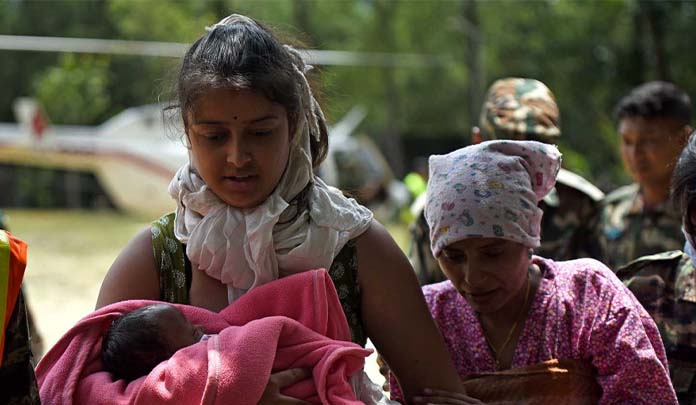
The devastating floods in Nepal have destroyed homes, livelihoods and communities. But beyond the visible destruction lies another crisis: the safety, dignity and long-term well-being of women and girls.
The floods affecting communities across Nepal, including Nuwakot, Rasuwa and Dhading, have left families facing immense loss and uncertainty. Homes, roads and bridges have been swept away, livelihoods destroyed, and families left struggling to rebuild their lives. Yet surviving a disaster does not necessarily mean being safe.
The Hidden Vulnerabilities of Women and Girls
Natural disasters do not affect everyone equally. While entire communities experience displacement, destruction and uncertainty, women and girls can face additional risks arising from existing gender inequalities and inadequate protection systems.
In temporary holding centers in affected areas, men, women and children of different ages may be accommodated together, with insufficient privacy and inadequate sanitation facilities. For displaced women and adolescent girls, the absence of private spaces to change clothes, access menstrual hygiene facilities or seek psychological support raises serious concerns about health, dignity and personal security.
The limited presence of women in security and protection roles can create additional difficulties. Where access and security are predominantly managed by male authorities, displaced women may have fewer opportunities to raise sensitive concerns or participate in decisions affecting their safety. Such conditions can heighten vulnerability to gender-based violence, sexual exploitation and trafficking, particularly when protection mechanisms are weakened during an emergency.
Disaster response must therefore go beyond providing temporary shelter. Safe accommodation, accessible sanitation, psychosocial counselling and confidential protection services are essential components of an effective humanitarian response.
When Relief Does Not Reach Those Who Need It
A major challenge following a disaster is not simply the availability of humanitarian supplies but ensuring their timely and equitable distribution. Coordination and distribution can become significant obstacles, particularly for isolated and hard-to-reach communities.
These challenges have important consequences for women and girls, especially those caring for children, older relatives or family members with disabilities. When access to humanitarian assistance is limited, existing inequalities can deepen. Women who already carry substantial caregiving responsibilities may face additional difficulties obtaining food, hygiene products, health services and other essential resources.
An effective response must therefore identify the needs of different groups within affected communities rather than assume that all households experience emergencies in the same way.
Women must also be included in determining how assistance is distributed. Their participation can help identify overlooked needs, improve accountability and ensure that relief efforts reach those most at risk of exclusion.
Early Warnings Must Lead to Action
Disaster preparedness is another critical concern. When river levels rise or other warning signs emerge, communities must have the information and preparedness necessary to respond quickly.
Disaster warnings are effective only when communities receive, understand, trust and act upon them. As climate-related hazards threaten vulnerable communities, strengthening early-warning systems must be a priority. However, preparedness cannot depend on technology alone. Community education, accessible communication and local participation are equally important.
Women must be meaningfully involved in disaster risk reduction planning, community preparedness and emergency decision-making. Their inclusion helps ensure that warning systems, evacuation procedures and emergency shelters reflect the realities of those most likely to face barriers during a crisis.
Recovery Must Continue After the Floodwaters Recede
One of the most painful consequences of disasters is the uncertainty faced by families searching for missing loved ones. Photographs and notices of missing people represent families waiting for answers, grieving loved ones or holding on to the hope of reunion.
The emotional and psychological consequences of such disasters can persist long after the immediate physical danger has passed. For women who have lost family members, homes, sources of income or support networks, recovery may involve prolonged economic insecurity alongside grief and emotional distress.
Psychosocial support must therefore be integrated into both emergency assistance and long-term rehabilitation programs. Equally important is restoring livelihoods and ensuring access to education, healthcare and opportunities for economic independence.
Reconstruction cannot be measured solely by the number of roads, bridges or houses rebuilt. It must also consider whether affected communities, particularly women and girls, can regain security, autonomy and stability in their daily lives.
Putting Women at the Centre of Climate and Disaster Policy
The devastation in Nepal illustrates why gender equality must be treated as a central component of climate adaptation, disaster risk reduction and humanitarian policy rather than as an additional consideration.
A gender-responsive approach requires governments, humanitarian organizations and civil society to work together to:
- Ensure equitable access to emergency relief, including for isolated and marginalized households.
- Establish safe, private and accessible spaces for displaced women and children, with appropriate sanitation and menstrual hygiene facilities.
- Strengthen prevention and response mechanisms addressing gender-based violence, trafficking and sexual exploitation.
- Provide accessible psychosocial and mental health support for survivors and grieving families.
- Include women in emergency coordination, protection, security and reconstruction decision-making.
- Develop long-term recovery programs addressing women’s livelihoods, economic security and access to essential services. These measures are not simply questions of humanitarian efficiency. They concern women’s fundamental rights to safety, dignity, participation and equality.
Nepal’s experience also reinforces the importance of learning from previous emergencies. The need for women- and child-friendly spaces was already recognized during the country’s earthquake response. Such protections should be embedded in disaster preparedness before another emergency occurs, rather than repeatedly introduced after vulnerabilities have become apparent.
Beyond Emergency Relief: A Commitment to Dignity and Equality
The devastation in Nuwakot, Rasuwa and Dhading is a reminder that the consequences of disasters extend far beyond their immediate destruction. While floodwater may eventually recede, the challenges facing affected families can continue long afterward.
Emergency assistance remains essential, but lasting recovery demands sustained investment in protection, livelihoods, community resilience and inclusive decision-making.
Most importantly, women and girls must not be viewed solely as vulnerable recipients of assistance. They must be recognized as active participants and leaders in shaping disaster preparedness, humanitarian response and reconstruction.
A disaster response cannot be considered successful if it restores infrastructure while leaving women and girls exposed to insecurity, exclusion and violence.
Nepal’s recovery must therefore be measured not only by what is rebuilt, but by whether those affected are able to rebuild their lives with dignity, safety and equal opportunities. The responsibility to protect women and girls does not end when the floodwaters disappear.